
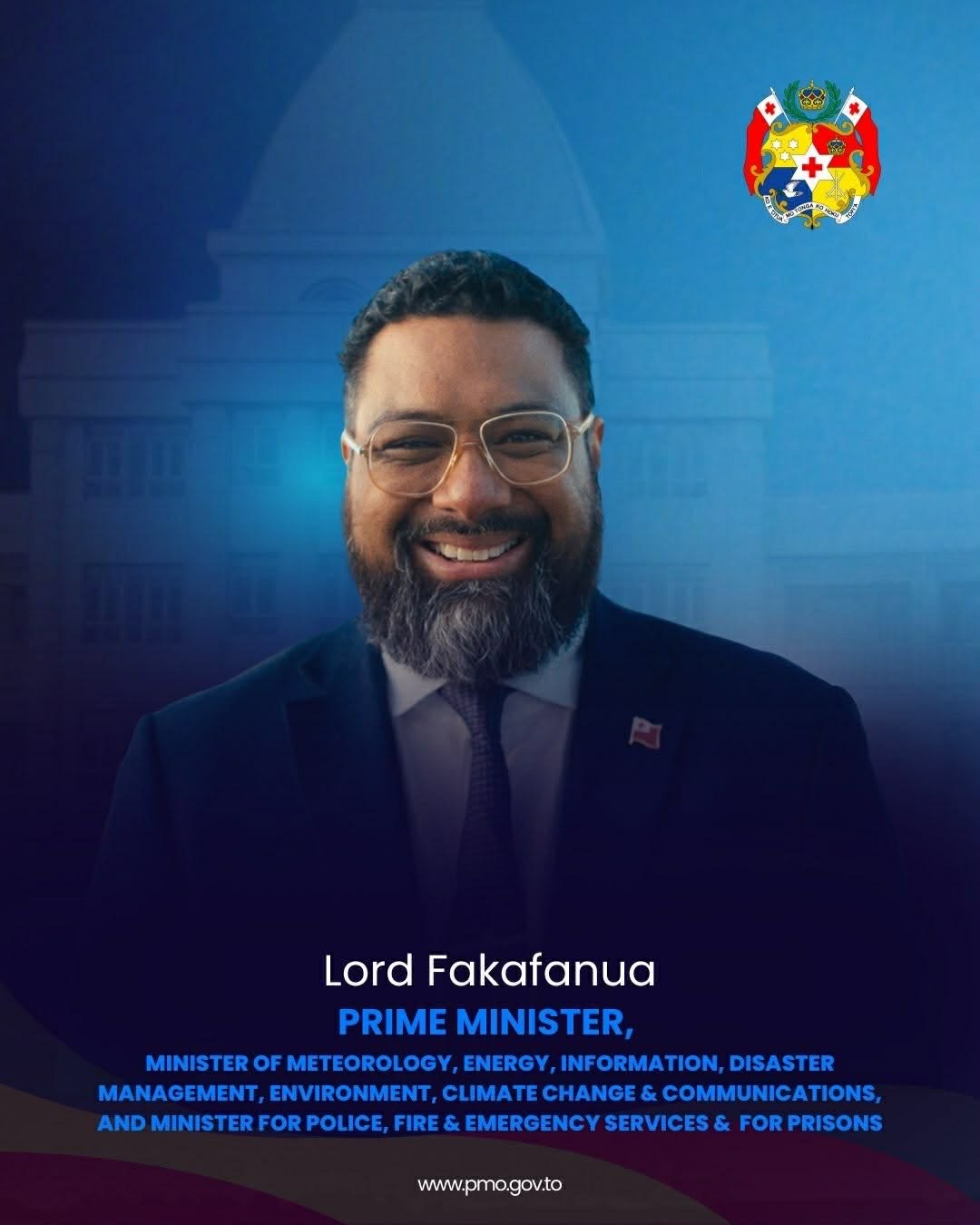
Lord Fakafānua Says Long-Neglected Issues Behind Many of Tonga’s Current Challenges
By ´Ofa Vatikani | Editor, Fetu´u ´Esiafi
Prime Minister Lord Fakafanua says many of the issues currently dominating public debate in Tonga are the result of problems that have been left unresolved for years and, in some cases, decades.
In a recent discussion with Fetu´u ´Esiafi, the Prime Minister responded to questions regarding the Fanga´uta Bridge project, tourism infrastructure in Vava´u, government cybersecurity, digital transformation, public accountability, and broader development challenges facing the Kingdom.
The discussion began with concerns shared by many Tongans regarding the pace of development and the recurring issues that continue to surface in national conversations.
From the Fanga´uta Bridge and land disputes to tourism, corruption concerns, rising living costs, and government performance, many citizens continue to ask whether enough progress is being made.
Responding to questions about the Fanga´uta Bridge project, Lord Fakafanua said work on the project remains ongoing and that the Government has had to address issues inherited from the previous administration.
“Construction has continued. We had to mop up after the previous government,” he said.
When asked about reports that the Government had paid approximately $7 million to McConnell Dowell during project delays, the Prime Minister said the matter would be addressed through Parliament.
“As per my reply to Parliament. We´ll submit a full report with supporting documents.”
The bridge project has attracted significant public attention in recent months, particularly following reports of delays linked to unresolved land issues and contractual obligations.
Beyond political noise
The Prime Minister said that many issues that attract public attention are often more complicated than they initially appear.
“We are slowly but surely working through the long list of things the government needs to do that’s been left unattended for too long. This is above and beyond the new initiatives we´re progressing.”
Whether one agrees with that assessment or not, the comment touches on a broader challenge facing Tonga’s public discourse.
Complex issues involving infrastructure, government finance, land, procurement, technology, and economic development are often reduced to political slogans, personalities, and social media debates.
The deeper policy questions can sometimes be lost in the process.
Tourism and the cost of neglect
One example raised during the discussion was the state of tourism infrastructure in Vava´u.
The Prime Minister argued that not all economic challenges require major capital projects.
Sometimes the problem is much simpler.
According to Lord Fakafanua, years of underinvestment in small-boat wharves and facilities for visiting yachts have created avoidable barriers for tourism operators and visitors.
“These are easy fixes that have lapsed for too long, such as rubber tyres to prevent boats from damage at the wharf.”
He said the absence of such basic infrastructure can result in significant losses to tourism revenue despite requiring relatively modest investment to correct.
For a country seeking to expand its tourism sector, the comments highlight how maintenance and operational improvements can sometimes deliver substantial economic benefits.
Cybersecurity and government reform
Another issue discussed was the growing cybersecurity challenge in government systems.
Concerns were raised following reports from ICT professionals about frequent cyber-attacks targeting government networks and the difficulty some departments face in securing resources for software licensing and cyber protection.
The Prime Minister acknowledged these challenges and outlined several reforms currently underway.
“I know the challenges. I migrated all of e-Parliament to Microsoft 365.”
He said the government has centralised e-government budgeting under the Ministry of Finance and is developing a government-wide e-procurement policy aimed at establishing consistent standards across ministries and agencies.
“For the government, I´ve centralised the e-govt budget under finance. They´re all in different stages of development. I´m developing a government e-procurement policy that will set the government standard for software and hardware across all of government.”
According to Lord Fakafanua, the reforms are intended to improve efficiency, strengthen cybersecurity, reduce duplication, and achieve savings through coordinated procurement.
The Prime Minister also confirmed that Customs is transitioning away from an outdated system following concerns about vulnerabilities in existing government technology platforms.
“That´s why Customs is moving to a new system. The current one is long expired and out of date.”
Reform takes time
Throughout the discussion, one theme remained consistent.
The Prime Minister believes many of Tonga’s challenges stem from systems that have remained stagnant for too long.
The statement reflects a broader argument that sustainable improvements require institutional reform, investment, and long-term planning rather than quick fixes.
While many Tongans may differ on political priorities or how quickly change should occur, the discussion highlighted a common concern: the need to strengthen public institutions, modernise government systems, improve infrastructure, and create conditions for long-term national development.
Media, education and public understanding
The conversation also returned to a point both parties agreed on: the importance of education and informed public discussion.
As Tonga´s political debates increasingly play out on social media, the challenge is not simply access to information but to understanding.
Rumour often travels faster than evidence.
Opinion often travels faster than analysis.
For media organisations, educators, public institutions, and political leaders alike, the task is not merely to inform citizens but to help them understand the issues shaping their lives.
As Tonga continues to navigate economic pressures, infrastructure demands, digital transformation, and public expectations, the quality of public understanding may prove just as important as the policies themselves.
ENDS
